

Fifteen-year-old Finn Holland has a passion for animals, so when he learned that a shark had washed ashore near his home in the coastal community of Maces Bay, located in southern New Brunswick, he felt compelled to assist.
On Saturday evening, Holland and his family took their side-by-side vehicle along their lengthy driveway leading to the beach at Maces Bay, situated southwest of Saint John.
“When we arrived, it appeared really injured, almost lifeless,” Holland recounted. “But then we noticed slight movements.”
“So, I pulled it in by the tail into the ocean and assisted it in navigating the water, and it just took off.”
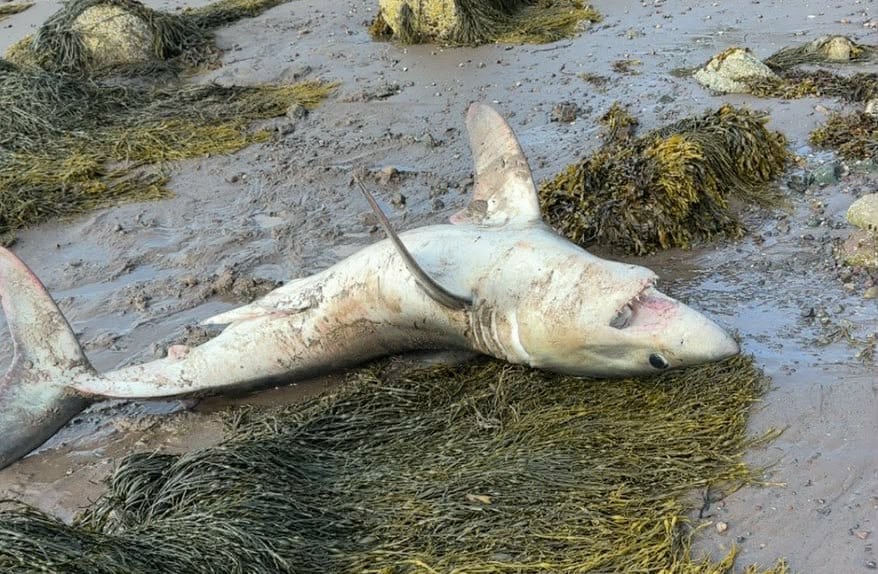
Finn Holland rescued a two-meter, 70-kilogram porbeagle shark that had washed ashore. (Submitted by Jill Holland)
Holland admitted he was initially reluctant to touch the shark, which measured approximately two meters in length and weighed around 70 kilograms. The species has since been identified as a porbeagle shark.
“I was amazed; it was incredibly interesting,” Holland noted.
Jill Holland, Finn’s mother, expressed that she was not surprised by her son’s actions.
“This is exactly the kind of thing he would do—without even asking, just, ‘I have to save a shark, see you later,’” she said.
“He took it upon himself, and I was quite anxious.”
Jill mentioned that they have resided in the community for 11 years and had never encountered any information regarding sharks being present in the area.
A shark expert indicated that such sightings are uncommon.
‘Rare’ encounter, expert says
“Sighting sharks in their natural habitat, without actively fishing for them, is quite rare,” stated Neil Hammerschlag, director of the Shark Research Foundation and president of Atlantic Shark Expeditions.
“A sighting of that species is quite special, in my opinion.”
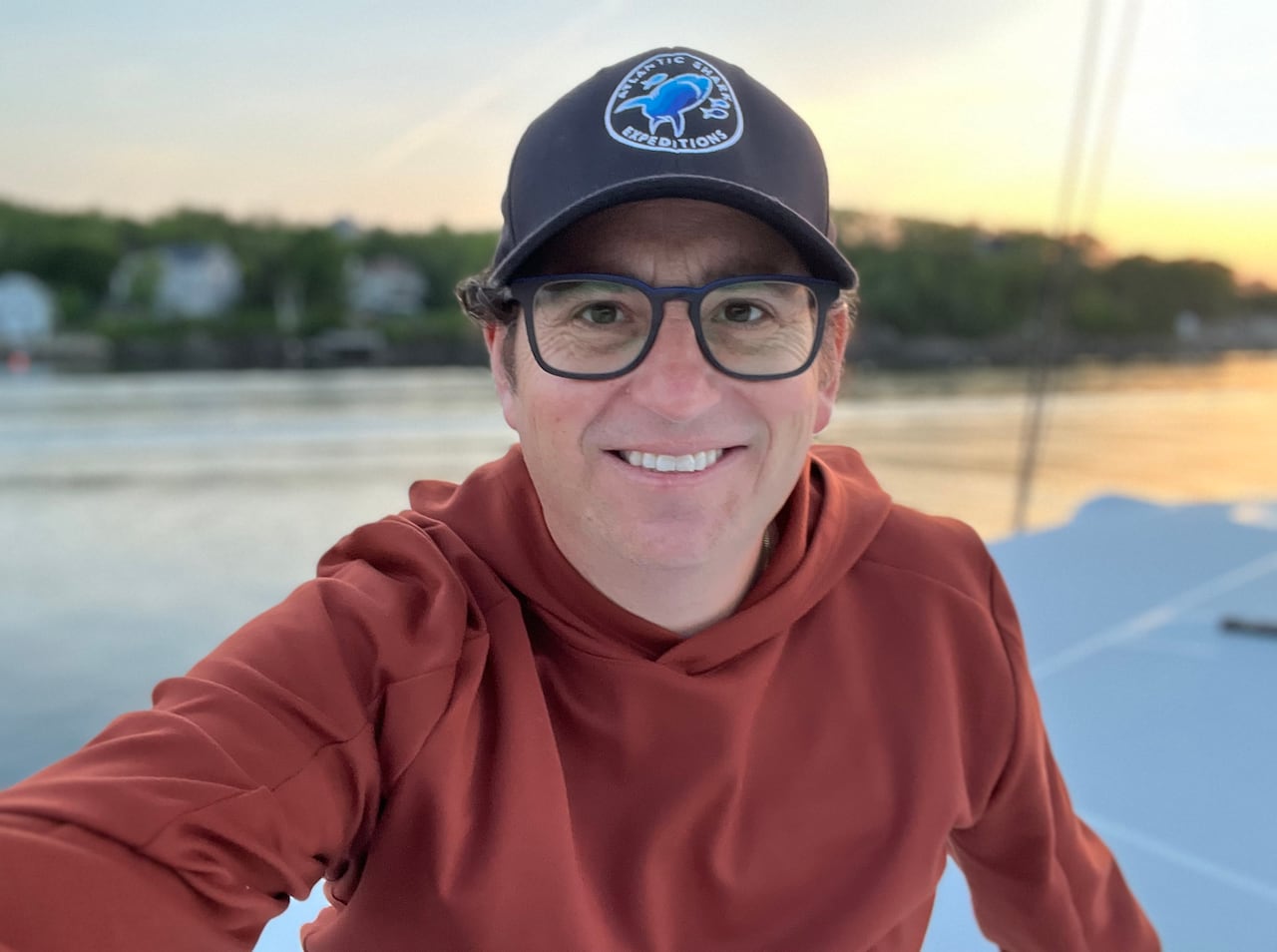
Neil Hammerschlag, director of the Shark Research Foundation and president of Atlantic Shark Expeditions, remarked that the sighting is rare since the species typically does not inhabit shallow waters. (Submitted by Neil Hammerschlag)
Hammerschlag explained that unlike many shark species, porbeagles can maintain a body temperature that is warmer than the surrounding waters, enabling them to thrive in the cooler waters of Atlantic Canada and New England.
However, he noted that the unusual sighting likely indicates the shark was in distress, as they are not commonly found in shallow areas.
“It might be sick or perhaps it had an encounter with fishing gear, leading to it being caught and then released,” he speculated.
Hammerschlag added that the rarity of such encounters is also due to the significant decline in their population over the years caused by overfishing.
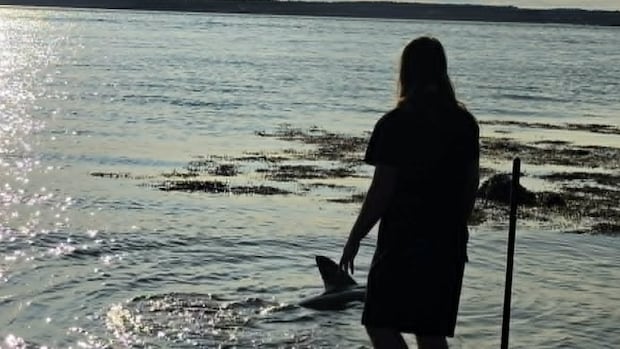
Fifteen-year-old Finn Holland pulled a porbeagle shark by its tail fin back into the ocean on the weekend.
The Advisory Committee on the Status of Endangered Wildlife in Canada classified the species as endangered in the Atlantic Ocean back in 2004, although the federal government has yet to do so.
“It’s wonderful that someone was courageous enough and capable of returning it to the water,” Hammerschlag remarked.
As for Finn, he is taken aback by the level of support he has received from his community regarding his shark encounter.
“Animals, they can’t express their gratitude for what we did, but you can sense it from their presence, which makes you feel like you made the right choice.”